13 Sep Haydn Shaw
Speaker: Haydn Shaw
Expert in Generations (Baby Boomers, GenXers, and Millennials), 6 Change Reactions, and Productivity
Speech Topics Include:
- Sticking Points: How To Get The 4 Generations Working Together In The 12 Places They Come Apart
- Leading The Millennials: Gaining, Training, And Retaining The Text Message Generation
- Don’t Miss Half Your Market: Selling To Traditionalists, Baby Boomers, Gen Xers, And Millennials
- Leading Through The 6 Change Reactions: Why Change Stalls And What You Can Do About It (For Leaders, Managers, And Supervisors)
- Understanding The 6 Change Reactions: Making Change Faster And Easier For All Of Us (For All Employees)
- Leading Across Multiple Generations: Helping Traditionalists, Baby Boomers, Gen Xers, And Millennials Get Past The Differences And Get Stuff Done
Haydn Shaw has spent more than 25 years helping organizations turn one of the most persistent sources of workplace friction — generational difference — into a source of genuine competitive advantage. He speaks on multi-generational teams, change management, and leadership, drawing on research with more than 1,500 businesses and training programs attended by over 150,000 people. TIME magazine has written that Shaw is ‘an expert on cultural differences at the office.’ The Washington Post called him a leadership guru.
Sticking Points
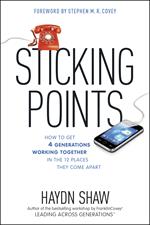
Haydn is the author of Sticking Points: How to Get Five Generations Working Together in the 12 Places They Come Apart and co-developer of FranklinCovey’s bestselling workshops Leading Across Generations and Working Across Generations. He has served as a senior consultant and one of FranklinCovey’s most requested speakers for more than 23 years, specializing in generations, leadership effectiveness, personal productivity, and trust. His generational keynotes are consistently cited as among the best presentations conference attendees have ever heard.
From Hilarity to Deep Reflection
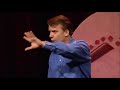
Shaw is known for taking audiences from laughter to genuine insight in the same session, combining data-backed content with immediately applicable tools. He also developed the Big Burp methodology for turning around negative employees and environments, and has trained more than 30,000 managers across industries.
Haydn Shaw delivers keynotes on generational leadership, change management, and building multi-generational teams.
Sticking Points: How To Get The 4 Generations Working Together In The 12 Places They Come Apart
They’re here. For the first time in history, you have four generations in your workplace and five generations as customers. Today you have to understand Traditionalists, Baby Boomers, Gen Xers, and Millennials just to write an email that won’t make someone angry. These generations think differently, vote differently, buy differently, and dress differently. Not understanding these differences creates conflicts and loses sales:
- What are the differences among the generations?
- What sticking points do the differences create for organizations, teams, or even families?
- How must marketing approaches change to reach the younger generations?
- What attracts and keeps younger employees?
- How will these differences complicate the mass exodus on the Boomers from the full time workforce over the next decade?
This popular session is full of laughter and insight. Come and see yourself, your customers, your people, and your future and walk away with practical ideas and plans for increasing your ability to get things done across the generations.
Leading The Millennials: Gaining, Training, And Retaining The Text Message Generation
The newest generation, the Millennials, are here and the Traditionalist, Baby Boomers, and Generation Xers only know one thing: it’s not business as usual. From their flip flops to their smart phones, the text message generation has a different approach. Organizations that figure out how to attract them, adjust to them, and retain them now will jump far ahead of those that ignore them until five years later.
Eventually, every organization will have to learn to work with Millennials in the war for talent. According the Bureau of Labor Statistics by 2013, Boomers will drop by almost 25% while Millennials will make up 25% of the workforce.
This presentation will explain how the Millennials are different, why Millennials are different, how to attract, train, lead, and retain the next generation.
You’ll laugh, you’ll cry, you’ll walk out with practical ideas you can use today. In the words of a thirty year boomer employee, “Before this presentation, I resented the Millennials for wanting things now that took me years to work for. But now, I understand how different their world was than mine and I can’t wait to understand them better so I can really enjoy working with them. Plus, this had really helped me understand my own kids. I’m going to talk with them differently tonight.”
Don’t Miss Half Your Market: Selling To Traditionalists, Baby Boomers, Gen Xers, And Millennials
They’re here. For the first time in history, you have four generations in your workplace and five generations as customers. Today you have to understand Traditionalists, Baby Boomers, Gen Xers, and Millennials just to write an email that won’t make someone angry. These generations think differently, vote differently, buy differently, and dress differently. Not understanding these differences creates conflicts and loses sales:
- What are the differences between generations?
- How do we market to the younger generations when they have a different focus than the Boomers did at their age?
- What issues do the differences create for teams or even families?
This popular session is full of laughter and insight. Come and see yourself, your customers, your colleagues, and your future. In this session you will …
- Learn if you “get it.” You’ll discover if you are being unconsciously rude to other generations.
- You will understand generational differences so you will know when you are taking another generation’s behavior too personally.
- They’ll get specific ideas for how to adjust your approach so you can become a trusted advisor to each of the generations.
Leading Through The 6 Change Reactions: Why Change Stalls And What You Can Do About It (For Leaders, Managers, And Supervisors)
When they announce changes, leaders tell their people that change is now a fact of life. But there is another fact of life: people respond to change in six ways. When leaders and managers ignore the 6 Change Reactions, they make change harder than it needs to be. But you and your leaders can create a change wave rather than struggle to push the change forward.
This humorous, fast paced session presents a breakthrough approach to change. You’ll understand The 6 Change Reactions and . . .
- Why change programs backfire
- Why trying to help people change is keeping them from changing
- How to map your team or organization on the 6 Change Reactions curve
- Why many change teams die a slow death after going in circles until the forward thinking people disengage
- How to set up a team for a quick start
- How to find and train change sales people who can convince the critical few that will move the change forward
- How to help the three negative reactors use their negativity to speed things up rather than bog them down
- How to deal with the one percent hard core resisters so they don’t ruin everything
You’ll never look at your people the same way again, and they will love you for it.
Understanding The 6 Change Reactions: Making Change Faster And Easier For All Of Us (For All Employees)
Change may be the new normal but the emotions it creates sure shakes up people. Just as the tsunami kills more people than the actual earthquake, people’s emotional reactions to change cause more problems than the change itself. This humorous presentation will help your people identify how they and their team mates or customers respond to change. Since people respond to change differently, understanding The 6 Change Reactions will help them ride the change wave and to . . .
- improve their change readiness
- adjust to change with less frustration
- avoid conflicts
- increase their change skills
- avoid the three ways they could get trapped in negative change emotions
- find their own personal change resources
- disarm their “Light Eater” colleagues, the most dangerous of the change resistors
This fast-paced presentation goes beyond understanding and gives your people a practical approach for dealing with each of The 6 Change Reactions. They’ll have new tools for helping their team members and customers move through the change wave. In addition, the presentation accelerates change by neutralizing your most resistant people in a way that will have everyone laughing.
The result: the presentation helps you speed up change by helping your people keep moving forward. They will never look at change or each other the same way again
Leading Across Multiple Generations: Helping Traditionalists, Baby Boomers, Gen Xers, And Millennials Get Past The Differences And Get Stuff Done
They’re here. For the first time in history, you have four generations in your workplace and five generations as customers. Today you have to understand Traditionalists, Baby Boomers, Gen Xers, and Millennials just to write an email that won’t make someone angry. These generations think differently, vote differently, buy differently, and dress differently. Not understanding these differences creates conflicts and loses sales:
- What are the differences among the generations?
- What issues do the differences create for organizations, teams, or even families?
- How must marketing approaches change to reach the younger generations?
- What attracts and keeps younger employees?
- How will these differences complicate the mass exodus on the Boomers from the full time workforce over the next decade?
This popular session is full of laughter and insight. Come and see yourself, your customers, your people, and your future and walk away with practical ideas and plans for increasing your ability to get things done across the generations.