
07 Jul Joseph Stiglitz
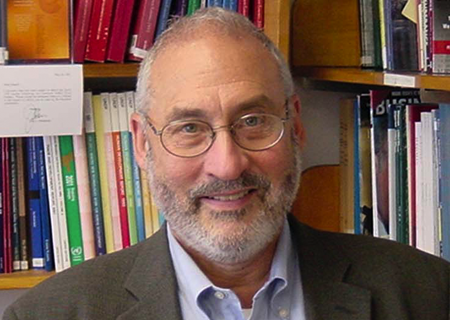
Speaker: Joseph Stiglitz
Winner of the 2001 Nobel Prize in Economics, Author of the Bestseller, Globalization and Its Discontents, Columbia University Graduate School of Business Professor and Former World Bank Chief Economist
Speech Topics Include:
- The Price of Inequality
- A Guide to the Economics of America
- Economics of Information
Joseph Stiglitz is a Nobel Prize-winning economist, Columbia University professor, and one of the most influential economic thinkers of his generation. A bestselling author and former World Bank chief economist, he provides audiences with penetrating analysis of globalization, inequality, and the forces shaping the global economy.
A Groundbreaking Career in Economics and Public Policy
Stiglitz won the 2001 Nobel Prize in Economics for his pioneering work on information asymmetries, creating an entirely new branch of economics called “The Economics of Information.” He served on President Clinton’s Council of Economic Advisers from 1993 to 1997, including as chairman, and then as chief economist and senior vice president of the World Bank. His contributions span macroeconomics, monetary theory, development economics, trade theory, and public finance. He received the John Bates Clark Award, given to the most outstanding American economist under 40.
A Global Voice on Economics and Inequality
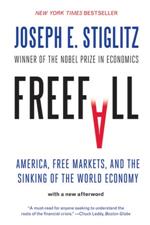
Stiglitz has authored numerous bestsellers including Globalization and Its Discontents, The Roaring Nineties, Making Globalization Work, and Freefall, which have shaped public discourse on economic policy worldwide. A graduate of Amherst College with a PhD from MIT, he has taught at Princeton, Stanford, Yale, and Oxford before joining Columbia University. He founded The Journal of Economic Perspectives and his textbooks have been translated into more than a dozen languages. His keynotes provide leaders with frameworks for navigating economic complexity and understanding the forces reshaping global markets.
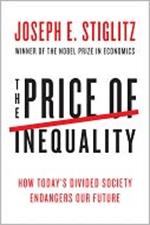
The Price of Inequality
Based on his important (and controversial) new book, The Price of Inequality, Joseph Stiglitz speaks about the causes of inequality, the reasons it’s growing so rapidly, and its economic impacts. He explains that markets are neither efficient nor stable and tend to keep money in the hands of a few rather than create competition, in an overall system that benefits the rich over the rest of society. He demonstrates how moving money from the middle and bottom of society to the top, far from stimulating entrepreneurship, actually produces slower growth and a lower GDP with even more instability. He concludes that redistributing wealth from the bottom up would produce far greater overall gains in our economies without adversely impacting financial elites.
The best-selling author of Globalization and Its Discontents, The Roaring Nineties, Making Globalization Work, and Freefall, Joseph Stiglitz won the Nobel Prize for Economics in 2001.
A Guide to the Economics of America
Economics of Information
 Chris Bashinelli - Humanity in Business Keynote - Collaborative Agency Group
 Chris Bashinelli - How to Increase Sales Keynote - Collaborative Agency Group
 Keynote Speaker CHRIS BASHINELLI | Steps from the Stoop- Cultivating Connection
 Chris Bashinelli | Life Story - Collaborative Agency Group
 Motivational Speaker CHRIS BASHINELLI | Global Citizen,- Open your world view
 Performance Speaker CHRIS BASHINELLI | Start at Step Z - Stepping into Powerful Performance