

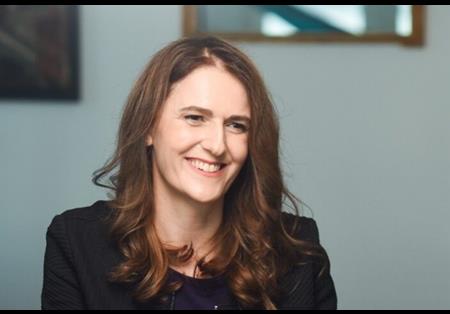
11 Mar Caroline Webb
Speaker: CAROLINE WEBB
Sevenshift CEO and Senior Adviser to McKinsey & Company, Author, “How To Have A Good Day”, Management consultant, economist and renowned leadership coach
Speech Topics Include:
How To Have A Good Day in Challenging and Uncertain Times
Seven Sources of Energy for a Tired Brain
How to Have a Good Day, Scientifically Speaking
Futureproof Leadership in the Future of Work
The Science and Practice of Sailing Through Setbacks
The Science and Practice of Making Your Time Go Further
Caroline Webb is the author of the bestselling How to Have a Good Day, a senior adviser to McKinsey and Company, and the CEO of Sevenshift, a firm that uses insights from behavioral science to transform how people work and lead. Her evidence-based approach to workplace performance has made her one of the most sought-after leadership speakers in the world.
Behavioral Science for the Modern Workplace
Webb spent 12 years as a partner at McKinsey and Company, where she co-founded the firm’s leadership practice. Her book, How to Have a Good Day, synthesizes research from behavioral economics, psychology, and neuroscience into practical strategies that anyone can use to be more productive, creative, and resilient at work. The book has been published in 16 languages and has been featured in The New York Times, The Wall Street Journal, Harvard Business Review, and Fortune.
Transforming Performance Through Science-Based Strategies
Webb holds degrees from Cambridge University and speaks to organizations worldwide about how to apply behavioral science insights to everyday work challenges. Her clients include major corporations, government agencies, and nonprofits seeking to improve decision-making, communication, and collaboration. Her keynotes deliver actionable, science-backed strategies for being more productive, improving workplace relationships, making better decisions under pressure, and creating the conditions for teams to do their best work every day.
How To Have A Good Day in Challenging and Uncertain Times
These are challenging times, full of uncertainty and radical shifts to the way we work. It’s not clear when there will be a real return to normal – or even what “normal” now means. There will undoubtably be some positive legacies from the experience of living through the pandemic – for example, we can hope for more openness to flexible working models. But in the meantime, ambiguity and upheaval continues to take a toll on mental health and wellbeing, making it hard for people to be at their best. The good news is that there are certain simple mental habits that have been proven to immediately give us a sense of control, making it easier for us think calmly, clearly and creatively. Caroline will explain the science and practice of three techniques that that we can use both for ourselves and with our teams, to help us navigate these times with skill and grace.
Seven Sources of Energy for a Tired Brain
We’ve long been used to our jobs demanding a lot of us, especially when there’s a need to solve a new problem under pressure or to land a new opportunity against the odds. But around the world many professionals are working longer hours than ever, as we deal with unprecedented uncertainty and radically new ways of working. To continue to thrive in this kind of environment, it’s ever more important to know how to sustain our sense of wellbeing and motivation when we’re stretched and tired. Luckily, insights from the behavioral sciences can help us with that. Research tells us that there are a number of small interventions that can make a big difference to our ability to perform and feel at our best under pressure. In this talk, Caroline Webb will share some of her favorite science-based tips for boosting energy and resilience even on the hardest of days.
How to Have a Good Day, Scientifically Speaking
Whether we have a good day at work of course depends partly on luck. Who knows what crises will unfold today? But behavioral science shows us that we have more control over apparently random events than we think – we just need to understand a little about how the human brain works. Caroline Webb will demonstrate how tiny science-based tweaks to our daily routines can transform our experience of what happens around us, the number of hours in the day, our level of intelligence and even other people’s moods. With these practical insights in your back pocket, you’ll be able to change your “luck” and put many more good days within reach – both for yourself and your colleagues.
Futureproof Leadership in the Future of Work
The workplace is set to change dramatically in the coming years, as AI takes over our most repetitive and predictable tasks. But at our best, human beings still have distinctive strengths over even the most sophisticated robot: we can make wise decisions and creative choices in ambiguous situations; we’re able to be empathic and inspiring to our fellow humans in challenging times. To thrive in the future workplace, leaders will need to create team environments that allow their colleagues to play to those precious human strengths of wisdom, creativity, empathy and inspiration. Luckily, behavioral science is pretty clear on what it takes to enable those human strengths to flourish – and Caroline Webb will show how to use these insights to become a futureproof leader.
The Science and Practice of Sailing Through Setbacks
Setbacks and periods of uncertainty are inevitable in professional life, so our ability to handle challenging situations hugely affects our chances of long-term success. The good news is that behavioral science suggests there are plenty of ways to increase your resilience to ups and downs. Drawing on years of experience in leading organizational change projects at McKinsey and coaching clients through difficult times, Caroline Webb will explain several powerful, research-backed techniques to help you stay cool when things go wrong, get back on track after disappointments and handle ambiguity with skill. With these tools in your pocket, you can take more control of the quality of your days—and ultimately boost the effectiveness of your team, whatever challenges are on the horizon.
The Science and Practice of Making Your Time Go Further
We all want to make the most of the hours in the day, but it’s not always easy to see how to maximize our productivity when we’re surrounded by the always-on demands of modern professional life. In this talk, Caroline Webb shows how we can get things done with less stress, more focus and higher energy, by creating the conditions that our brains really need to perform at their best. Combining leading-edge research with her extensive coaching and consulting experience at McKinsey and Sevenshift, Webb will demonstrate a number of practical tips that have transformed her clients’ professional lives by boosting their efficiency, sense of achievement and work-life balance.