23 Jun Robyn Meredith
Speaker: Robyn Meredith
Author, The Elephant and the Dragon and Bloomberg Television Foreign Correspondent
Topics:
- How to Win in the World’s ONLY Big Growth Markets
- All You Need to Know about India and China
- America’s Urgent Competitiveness Challenge
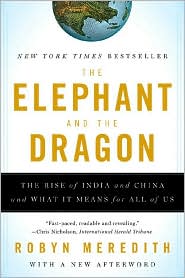
Robyn Meredith was reporting on Asian economies for Forbes when China and India were still treated as footnotes in Western business coverage. Her book The Elephant and the Dragon — named one of the top 10 books on Asia by the Wall Street Journal — became the definitive account of how these two economies were reshaping the global order.
A Decade of Ground-Level Reporting Across Asia
Meredith served for nearly a decade as Senior Editor, Asia for Forbes and has covered Asian markets extensively as a Hong Kong-based correspondent for Bloomberg Television. Her access to business leaders across the region, combined with extensive travel throughout Asia, gives her insights that go beyond the macroeconomic statistics that fill most conference presentations. She connects the data to the human decisions, cultural dynamics, and regulatory realities that actually determine business outcomes on the ground.
Connecting Asia’s Growth to Strategy in the Room
Her presentations serve as a wake-up call for audiences still underestimating the speed and scale of transformation in China and India, delivered with the frank directness of a seasoned journalist. She follows presentations with lively Q&A sessions that consistently shift how audiences think about global business strategy.
Robyn Meredith’s keynote presentations help business leaders understand Asia’s growth trajectory, assess the risks and opportunities in the world’s fastest-moving economies, and develop strategies for competing and winning in markets that will define the global business landscape for decades to come.
How to Win in the World’s ONLY Big Growth Markets
The road to recovery leads to Asia, with China leading the world out of recession. Today, China and India are the world’s only large, fast-growing economies, while the U.S., European and Japanese economies are becalmed in the doldrums. Forward-thinking companies and investors looking for growth are targeting largely untapped markets in China and India, with more and more companies earning bigger profits in Asia than at home. But to prosper, business leaders must understand how to do business there.
Robyn shares:
– How to profit from Asia’s astonishingly fast rebound
-How fast-growing China and India are key to revenue growth and cost-cutting
– How smart companies are harnessing the complementary strengths of China and India
– Just how vast the Chinese and Indian middle classes have become, how fast they continue to grow, and why that is crucial to future profitability
– How successful companies use their China and India operations to drive innovation on the cheap
All You Need to Know about India and China
The fact that these two giants are embracing globalization and capitalism represents a seismic shift in business and politics. Robyn Meredith calls this “Tectonic Economics.” The West must understand the changes at hand to thrive in this new world order.
You’ll learn from this speech:
– How the most important business revolution in a century is connecting China and India to the West
– How China has just gone through a fast-tracked Industrial Revolution, transforming a land of inefficient farms into a nation of modern factories
– How India, a service-industry powerhouse, has other unseen strengths
– How leaders can harness these powerful forces of change to help navigate the challenges of globalization
America’s Urgent Competitiveness Challenge
The powerful rise of China and India has Americans worried – and it should. But far from despairing about the arrival of the new economic leviathans, the U.S. needs to unlock its own massive potential with a fresh sense of urgency.
You’ll learn:
– How the rise of China and India has created a global job market
– That colleges in China and India are already churning out more than twice as many graduates as the U.S.
– How “disassembly lines” are connecting American stores to Asian workers
– Steps Americans can take to compete more aggressively
– How the bulk of China’s economic muscle actually belongs to Westerners
– If India and China can change themselves this dramatically, then so can the United States of America